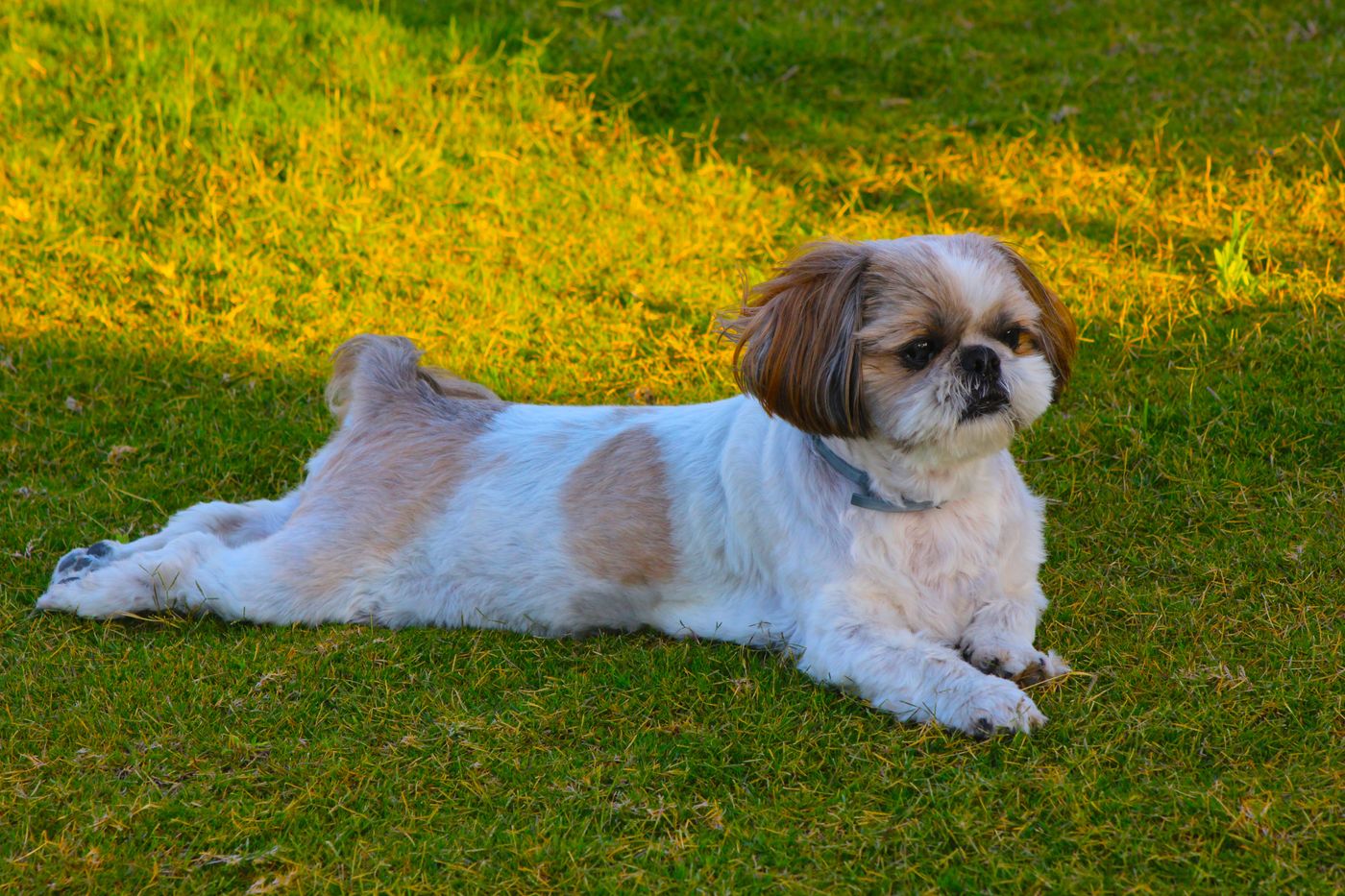
Living with a Shih Tzu
What day to day actually looks like, coat to bowl to vet visits.
What day to day actually looks like, coat to bowl to vet visits.
The everyday version
That long flowing coat looks high-maintenance, and grooming does take real effort. The bigger thing to plan for is the flat face: it is part of what makes a Shih Tzu's expression so appealing, and it means paying real attention to heat and breathing.

The long double coat mats easily if it is not brushed often. Many owners keep the classic long "show coat," which needs daily brushing, while others keep a shorter "puppy cut" that only needs brushing two or three times a week. See our grooming styles guide for a full breakdown of cut options, brushing frequency, and typical professional-grooming cost.

Shih Tzus are brachycephalic, meaning they have a shortened muzzle and flatter airway than most breeds. That is part of the look people love, and it also means they overheat faster and can struggle in humidity or after heavy exertion.
If you're in a hot, humid climate year-round, read our Florida breeder guide for state-specific heat precautions. Somewhere with real winters instead, our Ohio breeder guide covers coat and paw care through the cold months. That airway risk gets worse, not better, in a "teacup" or "imperial"-sized dog, see our teacup and imperial breakdown for why.

A high-quality diet sized to a small breed supports the coat and keeps weight in a healthy range. At 9 to 16 pounds fully grown, even a small amount of extra weight puts real strain on joints and breathing.
Beyond standard vaccinations and annual exams, ask your vet about periodic eye checks and dental care, both common concerns for the breed's flat face and small mouth. Bring up airway and breathing at every visit, especially as your dog ages.
Learn what to verify in a Shih Tzu breeder, then a home like yours.
About the breed